
Window Trends That Make North Carolina Homes Better

A replacement window should do more than fill an opening in the wall. It should make a room feel brighter without making it hotter, protect the home through humid summers and winter cold snaps, and suit the architecture that makes the house feel like yours. The most worthwhile window trends for North Carolina homeowners are less about chasing a look and more about choosing glass, frames, and configurations that improve everyday comfort.
For homes across Wake, Johnston, Franklin, Nash, and Wilson counties, the best decisions usually balance curb appeal with real performance. A dramatic wall of glass may be right for one sunroom or living room, while another home benefits more from efficient double-hung replacements that preserve its established character. The right choice depends on orientation, room use, existing trim, and how much heat, glare, or outdoor noise the home receives.
Window Trends That Put Comfort First
Larger glass areas with purposeful placement
Homeowners continue to ask for more daylight and clearer views of their yards, patios, and outdoor living spaces. Larger picture windows, paired units, and wide sliding or glass-panel openings can make a kitchen, living room, or sunroom feel more connected to the landscape. This approach is especially effective when a well-designed patio, pergola, screen room, or garden creates a view worth framing.
More glass is not automatically better, however. West-facing openings can bring intense late-day sun into a room, and unprotected south-facing glass may create unwanted heat and glare. High-performance insulated glass helps manage those conditions, but placement still matters. A custom window plan considers where the sun travels, how the room is used, and whether exterior shade from a porch roof, pergola, or mature trees can reduce the load on the glass.
Slimmer frames and cleaner sightlines
Clean, narrow-looking frame profiles are a leading design preference because they allow more visible glass without making the window look heavy. The result is crisp and current, yet it can work beautifully on traditional brick homes, contemporary farmhouses, and many transitional styles common throughout central and eastern North Carolina.
The key is proportion. Frames should complement the home rather than disappear at the expense of durability or energy performance. Premium vinyl replacement windows can offer a refined, low-maintenance profile while resisting the moisture, fading, and upkeep concerns that come with North Carolina weather. Careful measuring and meticulous installation matter just as much as the frame itself. Even a high-quality window cannot perform as intended if it is not properly fitted and sealed.
Dark exterior finishes used with restraint
Black and bronze window exteriors remain popular, particularly on homes with white siding, light brick, natural wood accents, or dark metal details. These finishes add definition around the facade and can visually tie windows to a front door, roofline, porch lighting, or outdoor structure.
This trend works best when the color has a clear relationship to the rest of the home. Replacing every window with a dramatic dark frame can look striking, but it may feel out of place on a more traditional property with white trim and soft exterior colors. In some cases, a darker exterior with a lighter interior frame gives homeowners the architectural contrast they want outside while maintaining a bright, familiar look indoors.
Window walls that connect rooms to outdoor living
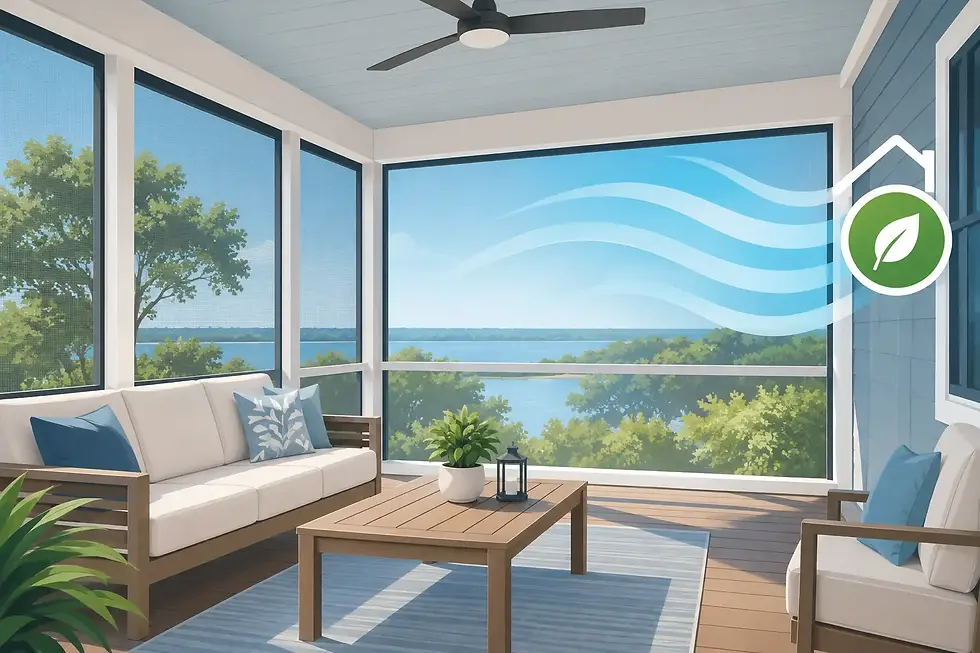
The line between indoor and outdoor space is becoming more intentional. Rather than treating a patio as an area separate from the home, homeowners are using expansive windows and glass enclosure systems to create a stronger visual connection. A living room overlooking a covered patio, a breakfast area opening toward a screened porch, or a sunroom that captures a landscaped backyard can all feel larger because the view extends beyond the walls.
For a true transition, the window layout should be considered alongside the outdoor project. Sightlines, floor height, roof coverage, privacy, and airflow all affect the finished experience. A window that overlooks an exposed, unfinished patio may simply reveal a problem. That same window facing a custom-built covered space or well-planned enclosure can become the focal point of the room.
Performance-Led Window Trends Matter More Than Fashion
The most enduring window upgrades are often the ones homeowners notice quietly: fewer drafts, less fading on furnishings, more consistent temperatures, and windows that open smoothly when fresh air is welcome.
Energy-efficient glass for heat and glare control
Low-emissivity, or Low-E, glass coatings are now a practical priority rather than a specialty upgrade. These coatings help manage solar heat gain while allowing useful natural light into the home. For North Carolina homeowners, that can mean a more comfortable room during the long cooling season and less strain on the HVAC system.
Glass selection should not be treated as one-size-fits-all. The ideal option for a shaded north-facing bedroom may differ from the right choice for a sun-filled family room with west-facing exposure. Homeowners who want large glass areas should pay particular attention to the glass package, insulation value, and solar heat control. A knowledgeable installer can explain the trade-offs in clear terms instead of pushing a standard option for every opening.
Better ventilation without sacrificing security
Fresh air remains a major part of comfortable home design, especially during the milder spring and fall months. Double-hung windows are still a dependable choice because they suit many home styles and allow flexible ventilation. Casement windows can provide a tighter seal when closed and are often useful over kitchen counters or in locations where reaching a sash would be inconvenient.
The right operating style depends on the room and the homeowner's habits. A bedroom may benefit from easy daily operation, while a high wall in a vaulted room may be better served by a fixed window that maximizes light. In a sunroom or enclosed porch, pairing operable windows with screens or Eze-Breeze panels can create the adaptable airflow that makes the space useful through more of the year.
Quieter interiors and stronger weather protection
A window replacement project is also an opportunity to improve the feel of the home during storms, traffic, lawn equipment, and neighborhood activity. Insulated glass units, solid frame construction, and precise sealing can reduce outside noise while helping block air and water intrusion.
This is where installation quality becomes critical. Window performance is not determined by a showroom sample alone. The opening must be evaluated for existing damage, flashing concerns, trim conditions, and proper drainage. Shortcuts may be hidden initially, but they can lead to drafts, moisture issues, and premature repairs. Custom-fit work with artisanal care protects both the investment and the home around it.
Choosing a Window Style That Fits the Home
The strongest designs do not force a home into a passing trend. They update the property while respecting its scale and character. A colonial-style home may call for balanced double-hung windows with divided-light details, while a newer ranch or contemporary home may benefit from larger fixed units and simple grids. Grid patterns, frame colors, interior finishes, and trim all influence the final result.
Before selecting a style, stand outside and look at the home from the street. Then consider the view from the rooms where your family spends the most time. Replacement windows should improve both experiences. If a room feels dark, identify whether the issue is window size, window placement, interior finishes, or an exterior obstruction. If the room feels too warm, determine whether the problem is aging glass, direct sun, inadequate shade, or all three.
A thoughtful project also accounts for timing. Replacing windows before adding a sunroom, patio cover, or porch enclosure can simplify the details around the connection points. On the other hand, designing the window and outdoor-living improvements together may create a more cohesive result. There is no universal sequence, but planning both sides of the wall at the same time often prevents costly compromises later.
Invest in the View You Use Every Day
Trends come and go, but comfort, daylight, and dependable weather protection remain valuable in every season. Whether the goal is a brighter living room, a more efficient home, or a better view of a new outdoor space, the right window should be custom-built to match your home's unique style and installed with lasting precision.
Before committing to a color or configuration, consider how the window will serve the room on a hot July afternoon, a rainy November morning, and the first mild weekend of spring. That practical perspective leads to a choice you will appreciate every time you look outside.


Comments