
Outdoor Living Trends That Last in North Carolina

Updated: Oct 21
A patio that is too hot by noon, a porch overtaken by mosquitoes, or a beautiful backyard used only a few weekends each year all point to the same opportunity: make the space work harder. The most meaningful outdoor living trends are not about chasing a look. They are about creating a comfortable, well-built extension of the home that suits North Carolina weather, your routines, and your property.
For homeowners across Cumberland, Wake, Johnston, Franklin, Nash, and Wilson counties, the strongest trend is clear: outdoor areas are becoming intentional living spaces. That may mean a shaded gathering place for family dinners, a bright enclosed room for quiet mornings, or a flexible patio cover that lets you enjoy fresh air without being at the mercy of sun and rain.
Outdoor Living Trends Center on Everyday Use
The best outdoor upgrade begins with a practical question: what keeps you from using this area now? The answer is rarely just a lack of furniture. Heat, glare, pollen, insects, rain, and a missing sense of privacy can make even a generous patio feel unfinished.
Current designs respond by giving homeowners more control. Rather than building a space for occasional entertaining alone, homeowners are investing in features that support weekday breakfasts, remote work, children’s play, reading, grilling, and relaxed evenings with friends. The goal is not to turn every yard into a resort. It is to make the space feel like it belongs to the home and earns its place in daily life.
This shift favors permanent, custom-built improvements over temporary shade sails, seasonal screens, and furniture that has to be moved every time the forecast changes. Those temporary solutions have a role, especially for a short-term need, but they do not provide the lasting comfort or tailored finish of a professionally designed enclosure or shade structure.
Flexible Shade Is Replacing One-Season Patios
A fully exposed patio can be enjoyable in mild weather, but North Carolina summers put that setup to the test. Strong sunlight can make surfaces uncomfortable, while sudden rain can cut an outdoor gathering short. Shade structures remain one of the most practical ways to turn an underused patio into a dependable destination.
Pergolas that add structure without closing off the sky
Pergolas continue to be a popular choice because they define an outdoor room while keeping an open, airy character. They can complement traditional, contemporary, and farmhouse-inspired homes when the proportions, finish, and placement are carefully considered. A pergola is particularly effective over a dining area, outdoor kitchen, or lounge space where partial shade is welcome but an open view still matters.
The trade-off is straightforward: a traditional open-slat pergola filters light but does not provide full rain protection. Homeowners who need consistent coverage may be better served by a solid patio cover or an adjustable louvered system. The right choice depends on whether daylight, rain protection, or a balance of both is the priority.
Motorized louvers put light and shade on demand
Adjustable louver systems are gaining attention because they respond to changing conditions throughout the day. Open the louvers for morning light and breezes, angle them to reduce afternoon glare, or close them when a shower moves through. This level of control can make a patio feel usable across more seasons without permanently darkening the adjacent interior rooms.
A motorized louver system is a premium investment, and it works best when it is designed around the home’s drainage, roofline, and circulation paths. Details such as post placement, water management, electrical planning, and the transition to the existing patio deserve meticulous attention. A structure may look simple from the yard, but its long-term performance depends on how well those details are resolved.
Enclosures Create More Time Outside
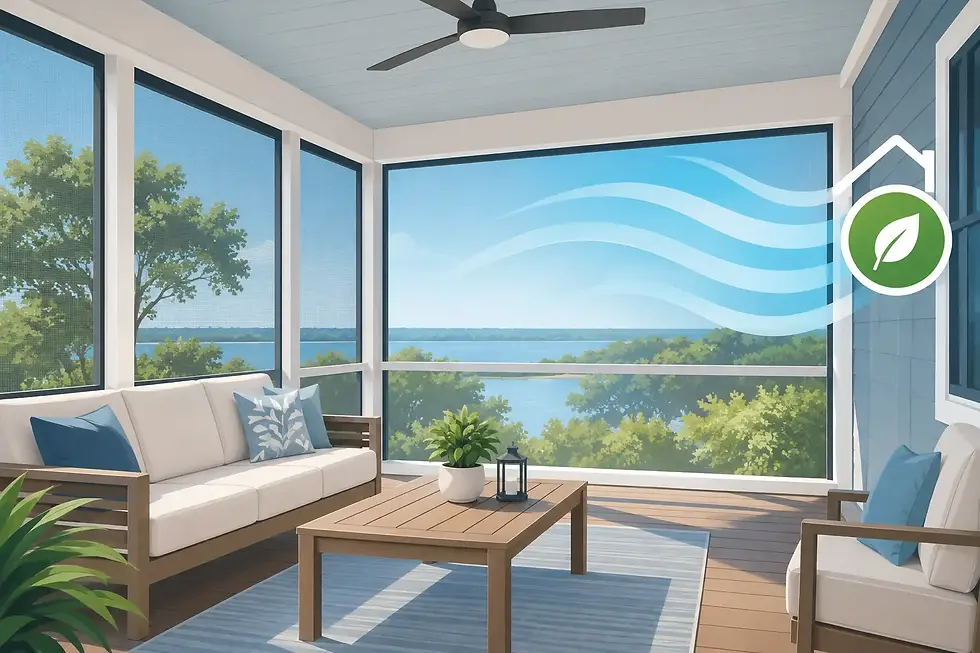
For many homeowners, insect control is the difference between admiring a porch and actually living on it. Screen rooms remain a practical, attractive answer, especially for families who want fresh air without the interruption of mosquitoes, flies, and windblown debris. A well-designed screen room also creates a natural buffer between the house and the yard, giving the home a relaxed place to gather without feeling disconnected from the outdoors.
Eze-Breeze enclosures add another layer of flexibility. Their vinyl panels can help manage wind, light rain, pollen, and cooler temperatures while still preserving the open-air feeling that homeowners enjoy. They are a strong fit for a covered porch that needs a longer usable season but does not require a fully conditioned room.
For the greatest year-round comfort, a custom sunroom or glass enclosure can create a bright, protected space with a stronger connection to the home’s interior. These projects call for more planning than a simple screened porch. Window performance, ventilation, insulation, solar exposure, and the connection to the existing structure all affect the final result. A sunroom facing west, for example, may benefit from thoughtful glazing and shade planning to prevent late-day heat buildup.
The New Standard Is a Cohesive Home Addition
One of the most durable outdoor living trends is the move away from structures that look added on. Homeowners want rooflines, trim, colors, columns, and materials that feel appropriate to the original architecture. A finished outdoor space should look intentional from both inside and outside the home.
That does not mean every addition must copy the home exactly. A modern louvered cover can create an appealing contrast beside a more traditional house, and black-framed glass can give a porch a crisp, updated appearance. The key is proportion and restraint. When a structure is scaled correctly and tied into the home with quality materials, it can feel custom-built rather than merely installed.
This is also why site evaluation matters. Drainage patterns, existing rooflines, mature trees, utility locations, and the direction of the sun influence the design. A beautiful cover that directs water toward the foundation or blocks a preferred view is not a successful upgrade. Custom planning protects both the appearance and the everyday usefulness of the investment.
Privacy and Comfort Are Part of the Design
Outdoor living is often discussed in terms of shade and shelter, but privacy is just as important. As neighborhoods grow and lots become more closely connected, homeowners are looking for ways to create comfortable separation without making the yard feel closed in.
A strategically placed screen room, patio cover, or pergola can frame a private seating zone and direct attention toward the garden, pool, or landscape rather than a neighboring property. Side screens, carefully positioned panels, and thoughtful furniture placement can add another level of comfort. The best approach depends on the view, the slope of the lot, and how exposed the space feels from nearby homes.
Ventilation should receive equal consideration. A covered space needs to breathe, particularly during humid summer months. Screened openings, operable panels, ceiling fans, and a layout that captures prevailing breezes can make a noticeable difference. An enclosure that looks polished but feels stagnant on a July afternoon will not deliver the experience a homeowner expects.
Durable Materials Matter More Than a Fast Refresh
Style changes, but weather exposure does not. North Carolina outdoor spaces must handle heat, humidity, heavy rain, wind, pollen, and changing temperatures. That makes material selection one of the most important decisions in any project.
Premium framing, properly integrated roofing, durable screens or vinyl panels, high-performance glass, and dependable hardware help protect the investment. They also reduce the ongoing frustration of warping, fading, leaking, loose components, and difficult operation. Lower-cost materials may reduce the initial price, but they can become expensive when repairs, replacements, or early remodeling enter the picture.
The same principle applies to replacement windows. Energy-efficient windows can improve comfort near exterior walls, reduce drafts, and help create a more polished connection between indoor and outdoor areas. The right product depends on the home’s age, exposure, budget, and the condition of the existing openings. There is no single window or enclosure system that is best for every house.
Plan for the Way You Gather
The most inviting outdoor spaces have a clear purpose. A patio intended for weekend meals needs room for chairs to move comfortably. A gathering area around a fire feature needs safe circulation and seating that does not crowd the entry door. A porch used for quiet evenings may need less floor area but more attention to privacy, lighting, and a ceiling fan.
Before selecting finishes or accessories, consider how many people will use the space, where food and drinks will be served, and how guests will move between the kitchen, yard, and seating areas. These decisions can shape the size of the structure, its door placement, and the amount of coverage required.
Lighting deserves planning as well. Warm, layered lighting can make an enclosure or covered patio feel welcoming after sunset without washing out the yard. Task lighting near a grill or dining table serves a different purpose than subtle ambient lighting around a seating area. Building those needs into the project from the start produces a cleaner final result than relying on extension cords and temporary fixtures later.
Choose a Trend That Fits Your Home
A lasting outdoor improvement is not defined by what is most popular on a showroom floor. It is defined by whether it solves the problems of your particular home with craftsmanship that holds up over time. A screened porch may be the ideal answer for one family, while another may need a sunroom, a motorized louvered cover, or new windows that improve indoor comfort first.
Kelly Outdoor Living approaches these choices as custom home improvements, with careful attention to the home, the site, and the way the owners want to live. Start with the moments you wish you could spend outside more often, then build the protection, shade, and comfort that make those moments possible. We offer wholesale prices to home improvement companies and contractors and special pricing for the DIY homeowners. We ship to Pennsylvania, Delaware, Connecticut, Maryland, New Jersey, New York, and West Virginia.


Comments