
How to Reduce Patio Heat Glare Without Losing Light

Updated: Oct 24
A North Carolina patio can be shaded and still feel uncomfortably bright. By midafternoon, sunlight bouncing off pale concrete, a pool deck, vinyl siding, or glass doors can make it hard to read, eat, or simply relax outside. The right plan to reduce patio heat glare is not always about making the space darker. It is about controlling where the light enters, how it reflects, and when you need protection most.
For many homeowners, a patio is not underused because it is too small. It is underused because it is exposed at the wrong angle during the hottest, brightest hours of the day. A custom outdoor-living solution can preserve the open feel you enjoy while making the space more comfortable for family meals, entertaining, and everyday downtime.
DIY friendly at wholesale prices.
Pennsylvania, Delaware, Maryland, New Jersey, New York, West Virginia, Connecticut Patio Covers and Shade structures
Why Patio Glare Feels Hotter Than the Thermometer Says
Direct sun raises the surface temperature of a patio, but reflected light creates a separate problem. Light-colored concrete, stone pavers, smooth decking, windows, and nearby metal surfaces can throw intense light back upward into your eyes. That reflected brightness makes the area feel harsher, even when a table umbrella or roof provides some overhead shade.
Glare is especially common on west-facing patios. Late-day sun sits lower in the sky, slips beneath a roofline, and shines directly across seating areas. It can also enter from the side of a pergola, beneath a patio cover, or through a wide opening facing the yard. In this situation, adding more overhead coverage alone may not solve the problem.
Heat and glare should be evaluated together. A solution that blocks light but traps warm air can make a patio feel stuffy. One that provides airflow but leaves the setting sun unfiltered may still leave you squinting through dinner. The strongest designs balance shade, ventilation, views, and the architectural character of your home.
Start With the Direction of the Sun
Before choosing screens, a cover, or a louver system, notice when glare affects your patio. Spend a few days looking at the space in the morning, at midday, and late in the afternoon. The troublesome light may come from more than one direction.
South-facing patios receive substantial midday sun, particularly when roof overhangs are shallow. West-facing patios often need side protection from low afternoon sun. East-facing areas may be pleasant later in the day but difficult to use over breakfast. A north-facing patio may have less direct sun, yet still experience glare from bright surfaces around it.
Also look beyond the patio itself. Large windows across from the seating area, a light driveway, a neighboring roof, or a bright retaining wall can all contribute. This simple observation prevents a common mistake: investing in a beautiful cover that does not block the actual source of discomfort.
Choose Overhead Shade for Direct Sun
A permanent patio cover is often the most effective starting point when direct overhead sun is the primary issue. It creates dependable shade, protects furnishings from weather, and gives the patio a more finished connection to the home. Properly designed, it can extend the roofline naturally and complement existing trim, siding, and architectural details.
The depth of the cover matters. A shallow cover may shade the door opening but leave most of the usable patio in full sun. A custom-built design considers the size of the seating area, the height of the roof attachment, and the sun angle throughout the season. This is where precise measurements and meticulous installation make a meaningful difference.
Pergolas provide a lighter visual effect and can soften direct sun without closing in the space. They work well when homeowners want filtered daylight and an open-sky feeling. However, a traditional open-slat pergola may not provide enough protection for a patio with strong afternoon exposure. It is a beautiful choice when the goal is partial shade, not complete glare control.
Motorized Louvers Offer Adjustable Control
Motorized louver systems are especially useful where conditions change throughout the day. Open the louvers for sunlight and airflow in the morning, tilt them to cut high sun at midday, and close them when a passing shower arrives. This flexibility gives homeowners greater control of light and shade without relying on temporary umbrellas or fabric shades.
Louvers are most effective against high-angle sun. For low western or eastern glare, they may need to be paired with vertical screens or another side-shade solution. A well-planned system accounts for both overhead exposure and the sun that enters horizontally near the end of the day.
Add Vertical Protection to Reduce Patio Heat Glare
When glare comes from the side, vertical shading is the answer. Retractable screens, fixed privacy panels, and enclosure systems can block harsh light at the patio edge while preserving openness in other directions.
Exterior solar screens are a practical option for patios that need filtered daylight and improved comfort without a fully enclosed room. The screen material reduces visible brightness and solar heat before it reaches the seating area. Depending on the openness of the fabric, it can maintain a useful view of the yard while providing daytime privacy.
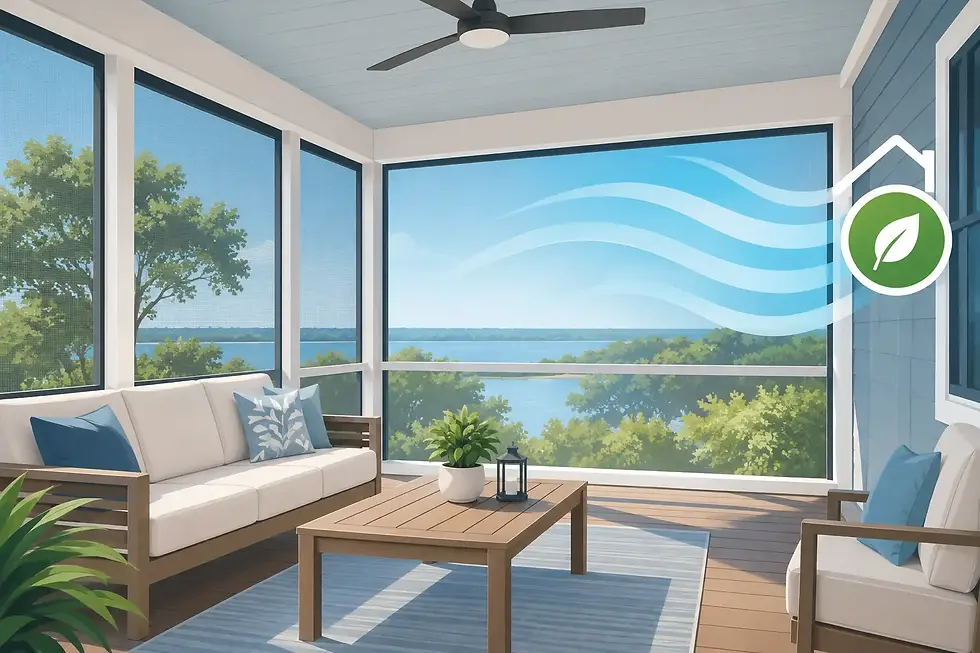
For patios exposed to insects as well as late-day sun, a screen room offers an additional layer of usability. It creates a protected outdoor setting for meals and gatherings while allowing breezes to move through the space. The key is choosing screen placement based on sun direction, not simply enclosing every side in the same way.
An Eze-Breeze enclosure can provide even more flexibility. Its vinyl panels can be adjusted for changing weather, giving homeowners a way to manage wind, pollen, light rain, and glare while retaining the relaxed character of a porch or patio. It is not the same as a fully insulated sunroom, but it can significantly extend the months a space feels comfortable.
Use Glass Carefully, Not Everywhere
Glass enclosures and sunrooms can create a bright, polished extension of the home, but glass must be specified thoughtfully when glare is a concern. Large untreated glass surfaces can intensify heat gain, particularly on south- and west-facing walls. The result may be a room that looks inviting but requires excessive cooling on sunny days.
High-performance glass and properly placed shading features can help control this effect. Roof overhangs, interior shades, exterior screens, and carefully planned window orientation all play a role. In some cases, fewer large glass openings on the most exposed side produce a more comfortable room than wall-to-wall glass.
For homeowners replacing windows near a patio, reflective glare should also be part of the conversation. Premium replacement windows can improve comfort inside the home, but their exterior finish and placement may affect how much sunlight reflects onto an adjacent outdoor seating area. A custom design should consider the patio and the home as one connected environment.
Reconsider the Patio Surface and Nearby Finishes
If your patio has adequate shade but still feels blindingly bright, the ground surface may be the issue. Smooth, pale concrete and glossy sealers reflect more light than textured or medium-tone materials. The same is true of bright white exterior walls, polished metal furniture, and highly reflective outdoor tabletops.
You do not always need to replace the entire patio. An outdoor rug in a durable, medium-tone material can soften reflected light around a seating group. Matte-finish furniture, textured cushions, and darker planters can also reduce visual intensity. These are supporting improvements, not substitutes for proper shade, but they can make a noticeable difference once the major sun exposure is addressed.
Avoid choosing very dark patio surfaces solely to eliminate glare. Dark materials absorb more heat and can become uncomfortable underfoot during your time in Maryland, New Jersey, Pennsylvania, and Delaware
Build the Solution Around How You Use the Space
The best way to reduce patio heat glare depends on whether the patio is used for quiet mornings, children’s play, large gatherings, grilling, or evening meals. A homeowner who entertains after work may need strong west-side screening. Someone who uses the patio mainly at lunch may benefit most from a deeper cover or adjustable louvers.
Consider the furniture layout, too. A shaded path from the house to the seating area is valuable, but so is protecting the chair where someone naturally sits at 5:30 p.m. Small shifts in the location of a dining table or lounge area can improve comfort, especially when paired with a custom cover or screen system.
Eastern Outdoor Aluminum Products approaches these decisions as part of a complete outdoor-living design, with materials and details selected to fit the home rather than force a standard solution onto the space. The goal is a durable improvement that looks intentional from every angle.
A patio should not require everyone to chase a narrow strip of shade as the day goes on. When light, airflow, and coverage are planned around your home’s orientation, the space can remain bright, welcoming, and genuinely comfortable long after the afternoon sun arrives.


Comments