
What Causes Patio Flooding? Common Problems

A patio should give your family a comfortable place to gather after a North Carolina rain, not a shallow pond that keeps everyone indoors. So, what causes patio flooding? Usually, it is not one dramatic failure. Water follows the easiest path available, and small issues with slope, roof runoff, soil, or patio construction can combine to direct a surprising amount of water onto the same surface.
The right repair depends on where the water originates, how quickly it arrives, and whether it is simply pooling on the patio or moving toward the house. Identifying that distinction before adding drains, extending downspouts, or building a cover helps protect both your outdoor living space and your home’s foundation.
What Causes Patio Flooding Around a Home?
Patio flooding occurs when rainwater cannot drain away quickly enough or is actively being directed onto the patio. In central and eastern North Carolina, intense summer storms can expose drainage weaknesses that may go unnoticed during a light shower. Clay-heavy soils in many areas can make the problem worse because they absorb water slowly, especially after several days of rain.
A well-built patio is part of a complete water-management system. Its finished elevation, slope, adjacent landscaping, roof drainage, and connection to the home all need to work together. When one element changes - perhaps new mulch raises a planting bed, a gutter clogs, or a settling paver creates a low spot - water can begin collecting where it does not belong.
Improper Patio Slope
The patio surface should pitch away from the home so water moves outward rather than collecting against the foundation. Even a slight backward slope can send runoff toward exterior doors, siding, and the edge of the slab. On paver patios, individual units may settle over time and form low pockets that hold water long after the storm has passed.
Concrete patios can have similar problems. Cracking, heaving, or settlement may alter a surface that was originally graded correctly. A patio that looks level to the eye may still have enough of a low area to retain water. The repair may be as focused as correcting a localized paver section, or it may require resurfacing or rebuilding part of the patio to establish consistent drainage.
Roof Runoff and Short Downspouts
One roof valley can release a large volume of water in a matter of minutes. If a gutter overflows, is undersized, or sends water through a short downspout extension, that runoff may land directly beside or across the patio. The result is often a fast-moving sheet of water rather than a gradual puddle.
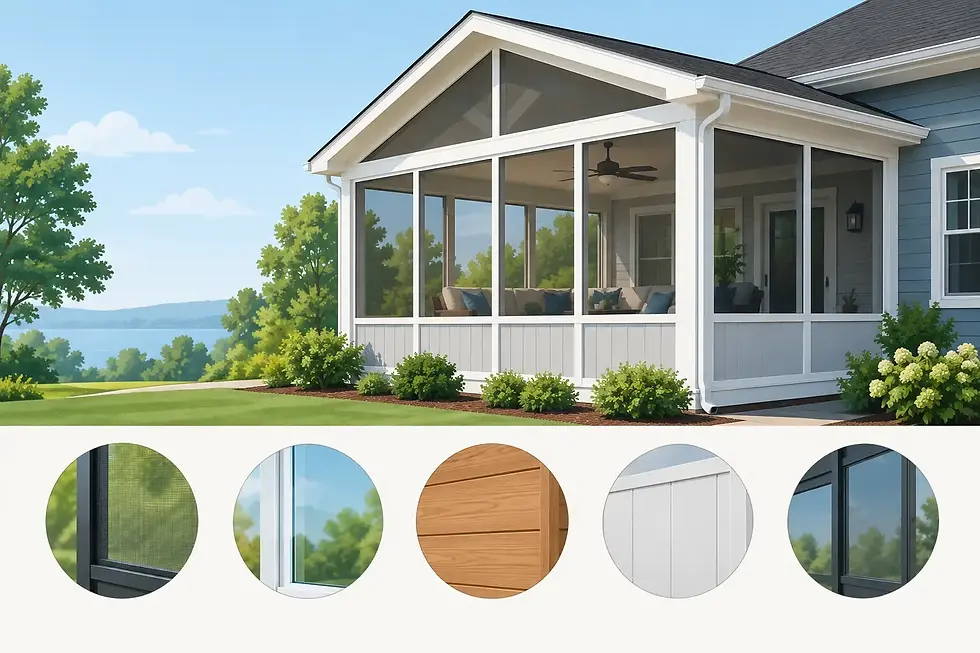
This is especially common near patio covers, screen rooms, and sunroom additions. A new structure changes how roof water is collected and discharged. The gutter and downspout plan should be designed as carefully as the structure itself, with water carried to a suitable discharge area rather than released beside the patio or foundation.
Landscape Grading That Funnels Water Inward
The ground surrounding the patio matters just as much as the patio surface. Soil, mulch beds, retaining edges, and lawn contours can create a channel that pushes water toward the house. Homeowners sometimes see this after landscape updates, when additional topsoil or mulch raises the grade along the patio edge.
Ideally, nearby ground slopes away from the home and does not create a basin around the patio. However, the best solution is not always to add more soil. Raising soil too high against siding can create moisture and pest concerns. Proper grading must balance positive drainage with appropriate clearance around the home’s exterior materials.
Compacted Soil and Poor Yard Drainage
If the yard stays soggy after rain, the patio may be receiving water from a broader drainage issue. Compacted soil, dense clay, or a naturally low property can prevent rainwater from soaking in and force it across the surface. In these situations, a patio drain alone may not solve the problem because the entire yard is still sending water toward that location.
A drainage plan may call for a swale, catch basin, French drain, buried downspout line, or other controlled route for runoff. The correct approach depends on the property’s elevation, soil conditions, available outlet, and local requirements. Water needs a place to go. A drain without a viable discharge path can simply move the pooling from one point to another.
Blocked Drains, Gutters, and Existing Channels
Sometimes the system is sound, but maintenance has fallen behind. Leaves, pine needles, mulch, and sediment can clog patio drains and gutter outlets. Paver joints can fill with debris and restrict the flow of water toward an intended drainage edge. A channel drain may look clear at the grate while its outlet pipe is blocked farther downstream.
Before investing in a major repair, inspect the area during a rainstorm if it is safe to do so. Watch where water first appears, where it accelerates, and where it stops. That observation often reveals whether the main issue is roof runoff, a surface low spot, an overflowing landscape bed, or a blocked drainage component.
Signs Patio Flooding Needs Prompt Attention
Standing water is inconvenient, but the concern goes beyond wet shoes and postponed cookouts. Repeated water exposure can stain concrete, wash out paver base material, encourage algae growth, and create slippery conditions. Water that remains against the house can also contribute to foundation moisture issues, deteriorated trim, and damage around doors.
Pay close attention if water reaches the threshold of an exterior door, pools beside the foundation, or appears inside a screen room or enclosed porch. Those signs call for a more complete evaluation, particularly when the area is attached to the home. Adding a patio cover may improve comfort and reduce direct rainfall, but it cannot correct poor drainage by itself. In fact, a cover changes runoff patterns and should be paired with a thoughtful gutter and drainage plan.
Practical Ways to Correct a Flooding Patio
The most effective repair starts with the source. If downspouts are dumping water near the patio, extensions or buried drain lines may be the priority. If the surface slopes toward the home, regrading, lifting and resetting pavers, or correcting concrete elevation may be required. When water enters from the yard, landscape grading and subsurface drainage may provide the lasting answer.
For patios with a predictable collection point, a properly placed channel drain can be useful. It is often installed at a doorway, between a patio and a planting bed, or along the edge of a covered outdoor area. Yet drains are not a universal fix. They require adequate slope, correct installation depth, and an outlet that can handle the collected water.
It also helps to consider how you intend to use the space after repairs. A custom patio cover, pergola, screen room, or glass enclosure can make an outdoor area more usable through changing weather, but the structure should be designed around the property’s drainage realities. Meticulous attention to roof lines, gutter placement, finished grades, and transitions to the home is what keeps a beautiful upgrade from creating a new water problem.
When a Professional Assessment Makes Sense
A homeowner can often clear gutters, extend a downspout, or remove a minor obstruction. But recurring flooding near the home, widespread paver settlement, or water that crosses multiple areas of the yard deserves professional attention. Guesswork can lead to expensive changes that merely redirect the problem.
An experienced outdoor-living contractor can evaluate the patio as part of the larger exterior system, not as an isolated slab or paver field. For homeowners considering an enclosure or shade structure, addressing drainage during the design phase is usually more efficient and produces a cleaner, custom-built result.
Your patio does not need to become unusable every time storm clouds roll through. With water guided intentionally away from the home, the space can return to what it was meant to be: a durable, welcoming extension of everyday living.


Comments