Polycarbonate Versus Aluminum Patio Covers

A patio that faces west can be pleasant at 10 a.m. and nearly unusable by late afternoon. For North Carolina homeowners, choosing a cover is not simply a matter of adding shade. It is a decision about summer heat, afternoon storms, natural light, roof runoff, and how well the finished structure belongs with the home. When comparing polycarbonate versus aluminum patio covers, the best choice depends on what you want your outdoor space to do.
An aluminum cover generally provides the deepest, most consistent shade. A polycarbonate roof allows daylight to pass through while reducing direct exposure to the elements. Both can be excellent long-term additions when designed around the patio, the home’s architecture, and the way your family uses the space. The meaningful difference is not which material is universally better. It is whether you need a cooler shaded retreat, a brighter covered gathering area, or a thoughtful combination of both.
Polycarbonate Versus Aluminum Patio Covers: The Core Difference
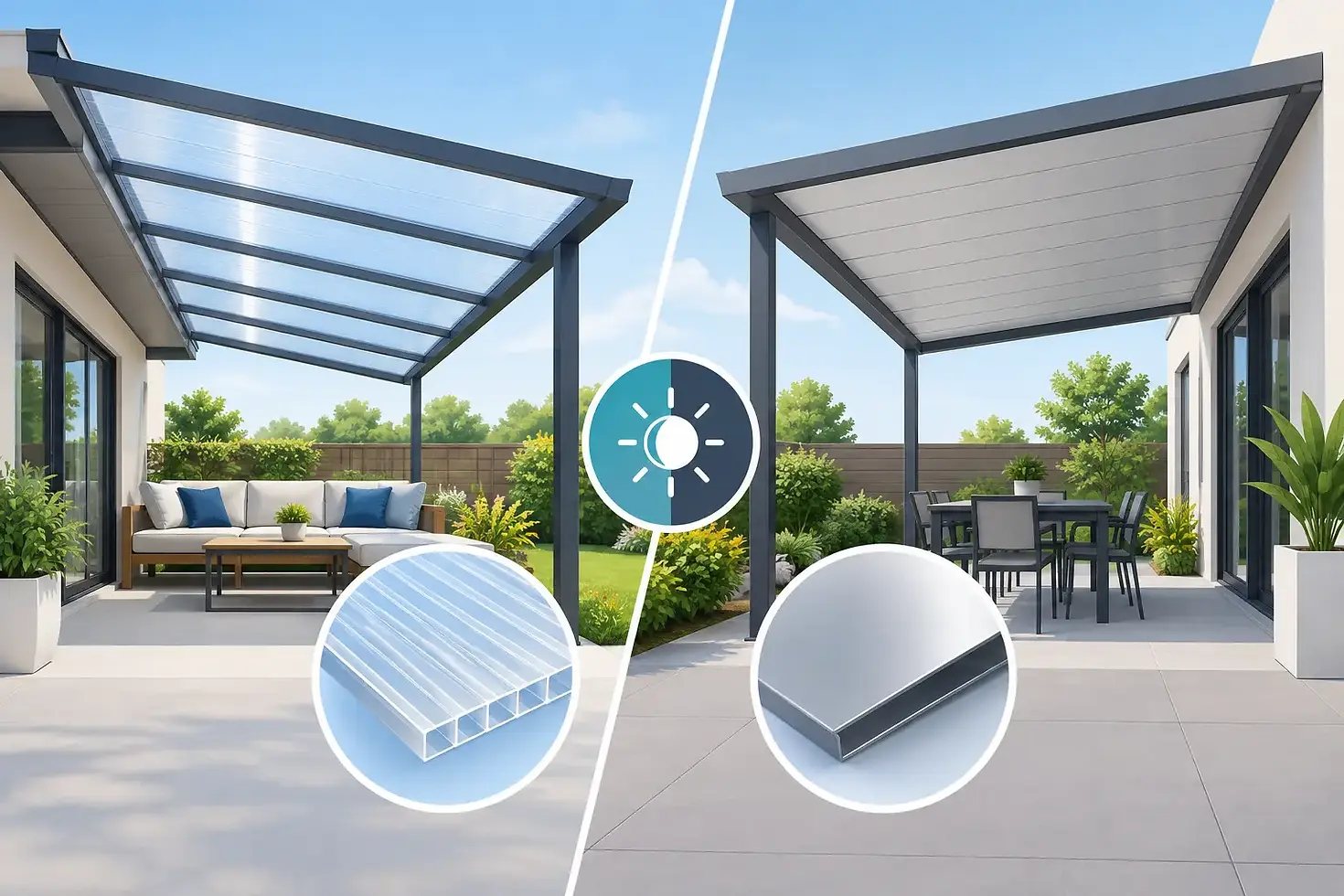
The simplest distinction is light transmission. Polycarbonate is a durable, lightweight glazing material available in clear, tinted, and multiwall panel options. It can create a weather-protected patio roof without making the adjoining interior room feel dark. Aluminum patio covers are typically solid roof systems with aluminum framing and insulated or non-insulated roof panels. They block direct sun and create reliable shade beneath the structure.
That distinction has practical consequences. Under a solid aluminum cover, a patio can remain significantly more comfortable during a hot July afternoon. Under polycarbonate, the space feels open and bright, which is especially appealing over a patio next to windows, French doors, or a garden view. However, daylight comes with solar gain. Even tinted or heat-reducing polycarbonate panels can allow more warmth below than an opaque, insulated aluminum roof.
Many homeowners picture this as an either-or choice, but custom design creates more options. A solid aluminum section over a seating or dining area can provide dependable shade, while polycarbonate panels over a walkway or perimeter preserve daylight. The result can feel tailored rather than standardized.
When Polycarbonate Is the Better Fit
Polycarbonate performs well when maintaining natural light is one of the project’s highest priorities. A covered patio can otherwise shade nearby living spaces, particularly when it extends from a rear wall with several windows. For homeowners who enjoy a bright breakfast area or do not want to block a view of the sky, trees, or landscape, polycarbonate can be a strong solution.
Its visual character also suits homes where a lighter, more transparent roofline makes sense. Clear panels provide the most open feeling, while bronze, gray, or opal-tinted panels can soften glare and help reduce the intensity of direct sunlight. Multiwall polycarbonate adds insulation value compared with a single-layer panel and can diffuse light for a gentler effect beneath the cover.
Polycarbonate is highly impact resistant, which matters during North Carolina’s heavy rainstorms, wind-driven debris, and changing seasonal weather. It is not the same as ordinary acrylic or thin plastic roofing. Quality panels installed with the proper framing, fasteners, expansion allowances, and flashing are engineered for outdoor use.
Still, transparency requires realistic expectations. Rain is audible on polycarbonate roofing, often more noticeable than on an insulated aluminum system. Pollen, leaves, and roof runoff can be visible overhead. Clear panels may also show dirt and water spotting sooner than solid roofing. These are not reasons to dismiss the material, but they are worth considering before choosing it for a large entertaining area.
Polycarbonate Works Best for Bright, Protected Spaces
A polycarbonate cover is often well suited to patios used for morning coffee, container gardening, casual lounging, or enjoying a backyard view. It can also be an effective transition between an open patio and a sunroom, screen room, or Eze-Breeze enclosure where daylight is part of the experience.
For strong afternoon exposure, panel color and orientation deserve close attention. A roof that faces east may remain comfortable with a lighter panel choice. A broad west-facing patio may benefit from tinted, heat-reducing polycarbonate, added side shading, or a hybrid design that places solid roof coverage where the sun is most intense.
When an Aluminum Patio Cover Makes More Sense
An aluminum patio cover is often the practical choice for homeowners who want their patio to feel cooler and more consistently shaded. By blocking direct sunlight, a solid cover protects outdoor furniture, reduces glare, and makes the space more usable during the hottest parts of the day. This is particularly valuable on exposed patios in Wake, Johnston, Franklin, Nash, and Wilson counties, where summer humidity can make direct sun feel unforgiving.
Insulated aluminum roof panels offer another level of comfort. Their foam core helps limit heat transfer from the roof surface into the patio below. They also tend to reduce rain noise compared with single-layer roofing and create a more finished, substantial overhead structure. For dining areas, outdoor kitchens, television viewing, or spaces intended for frequent entertaining, that added comfort can make a clear difference.
Aluminum also offers a clean architectural appearance. Properly designed systems can be finished to coordinate with trim, gutters, columns, and exterior colors, creating a custom-built extension of the house. Unlike a fabric awning, a permanent aluminum cover does not need to be retracted or stored between seasons. It provides protection through summer storms, falling leaves, and light winter weather.
The trade-off is reduced daylight. A large solid roof can darken the patio and the adjacent interior room, especially on the north or east side of a home. Careful roof projection, ceiling finish, color selection, and placement can help, but solid coverage will never have the airy feel of polycarbonate.
Not All Aluminum Covers Provide the Same Comfort
A non-insulated aluminum cover can deliver welcome shade and weather protection at a lower material cost, but it may radiate more heat downward on very sunny days and provide less sound control during rain. Insulated panels typically carry a higher upfront investment, yet they often make sense for patios meant to be used as an extension of the home.
The supporting structure matters just as much as the roof panel. Posts, beams, attachment details, drainage, flashing, and local wind requirements all affect performance. A cover that looks attractive on installation day but directs water improperly or fails to account for roof loads is not a lasting solution.
Cost, Maintenance, and Long-Term Appearance
Material cost is only part of the budget. The final price of either patio-cover style depends on size, roof configuration, attachment to the home, footing requirements, electrical additions, gutter integration, and site conditions. A simple freestanding structure may involve different engineering and foundation work than a roof-mounted cover. Custom details such as columns, ceiling fans, lighting, privacy walls, or screening also change the project scope.
Polycarbonate panels need periodic cleaning to maintain their appearance and light transmission. Use cleaning methods approved for the specific panel system, since abrasive tools or unsuitable cleaners can damage protective coatings. Over time, lower-quality panels are more likely to discolor, haze, or become brittle, which is why material selection should never be treated as an afterthought.
Aluminum is valued for its low-maintenance finish and resistance to rust. Occasional washing, gutter cleaning, and inspection of fasteners and sealants are usually sufficient. Quality installation is especially important where the cover meets the home. Meticulous flashing and drainage work protect the house as well as the patio structure.
Choose for How You Actually Live Outside
Before selecting a material, stand on the patio at the times you expect to use it most. Notice where the sun falls at breakfast, midday, and late afternoon. Consider whether the adjoining room needs daylight, whether rain noise would bother you, and whether the patio will host quiet coffee, family meals, or larger gatherings.
For maximum shade and a more room-like outdoor setting, an insulated aluminum patio cover is often the stronger investment. For daylight, visual openness, and protection without closing off the sky, polycarbonate can be the better match. And for many homes, the most refined answer is a custom combination designed around the sun, the structure, and the way the space will be enjoyed for years to come.
A well-planned cover should make stepping outside easier on an ordinary Tuesday afternoon, not just look impressive from the backyard. That is where experienced design, premium materials, and careful installation earn their value.


Comments